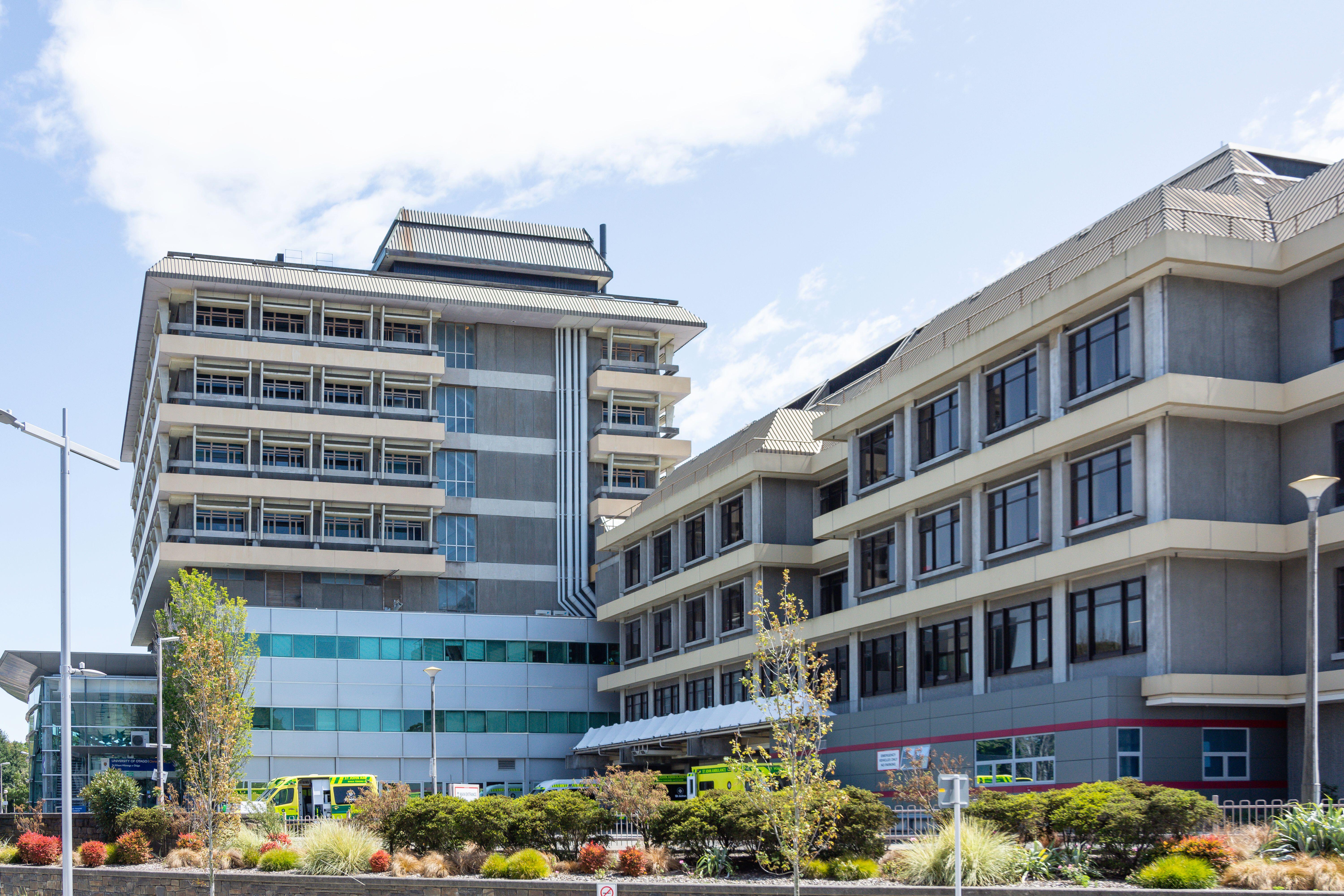
The Christchurch Earthquake Remediation projects were among the most complex and urgent undertakings in New Zealand’s public health sector. Following the 2010 and 2011 Canterbury earthquakes, the Canterbury District Health Board (CDHB) faced extensive damage across its network of hospitals and facilities – including Christchurch, Hillmorton, Princess Margaret, and Burwood campuses, along with numerous satellite clinics and support buildings.
There was no precedent for the scale or immediacy of the response required. The first priority was to rapidly assess structural damage and safety risks to enable emergency repairs and maintain critical hospital operations. WT was engaged in multiple capacities to support both the insurer (FM Global) and the CDHB, providing independent cost assessment, reporting, and verification to help stabilise the region’s healthcare infrastructure.
Over the course of the programme, WT gained substantial experience working within live hospital environments, coordinating with clinicians, contractors, and CDHB’s internal teams to ensure that construction activities could proceed safely while essential health services remained operational.
Services provided
WT provided full cost management and certification services across multiple sites and project stages, including:
- Independent cost assessments on behalf of insurer FM Global to establish the value of earthquake-related losses across all CDHB-owned properties
- Estimating and validation of reinstatement and repair costs across clinical, commercial, and infrastructure works
- Ongoing assessment of contractor payment claims and preparation of payment recommendations for CDHB
- Monitoring of variations and financial reporting across four major hospital campuses and smaller satellite sites
- Cost reviews for temporary and permanent building relocations, including the Outpatients Building
- Advice on repair methodologies, sequencing, and procurement in live, operational environments
- Integration of confidentiality and data security requirements into all financial reporting and documentation
Challenges
The scale and urgency of the remediation effort were unprecedented. With extensive damage across multiple hospitals and community facilities, the immediate priority was to restore essential services while planning longer-term repairs. WT’s role required fast cost assessment and reporting so critical work could proceed without delay.
Working within live hospital environments introduced major logistical and technical challenges. Many spaces, including maternity, inpatient, and outpatient areas, had to remain operational. This required strict attention to privacy, infection control, and safety, which in turn affected access, sequencing, and cost. Our estimates and variation assessments needed to account for these operational constraints and the additional costs of working in active clinical zones.
Existing building conditions were unpredictable. Structural damage, hidden asbestos, and outdated services often revealed themselves only after works began, forcing scope changes and cost revisions. WT developed rapid assessment and reporting processes to track these emerging issues and maintain accurate financial forecasts.
The sensitivity of the work also demanded discretion. WT had to manage confidential information, coordinate with multiple internal CDHB teams, and provide transparent reporting suitable for both insurer and government review. This required a strong understanding of CDHB’s internal protocols and decision-making priorities.
Successes and value added
WT’s involvement in the earthquake remediation programme extended well beyond cost assessment. Working across multiple hospital sites under intense pressure, we helped both the insurer and CDHB navigate complex reinstatement decisions with financial clarity and operational continuity in mind.
Our early cost validation work provided the framework for insurance recovery and prioritisation of emergency repairs, giving decision-makers the confidence to allocate funding where it was most urgently needed. As the response shifted from immediate recovery to long-term rebuild, we adapted our reporting processes to support transparent, defensible decision-making – something critical for a public health client managing multiple funding sources and stakeholders.
The hands-on nature of the work meant our team gained deep familiarity with hospital environments, from maternity and clinical spaces to administration and infrastructure. That insight directly informed how we evaluated risk, staged work, and managed cost implications in sensitive, live settings.
Through consistent communication, disciplined variation control, and pragmatic advice, WT helped the CDHB maintain trust between its insurers, project teams, and hospital management. The experience also strengthened WT’s capability in the health sector more broadly, shaping our approach to complex, multi-stakeholder projects and reinforcing our reputation for reliability under pressure. WT has since continued to support health-sector redevelopments informed by lessons from Christchurch.