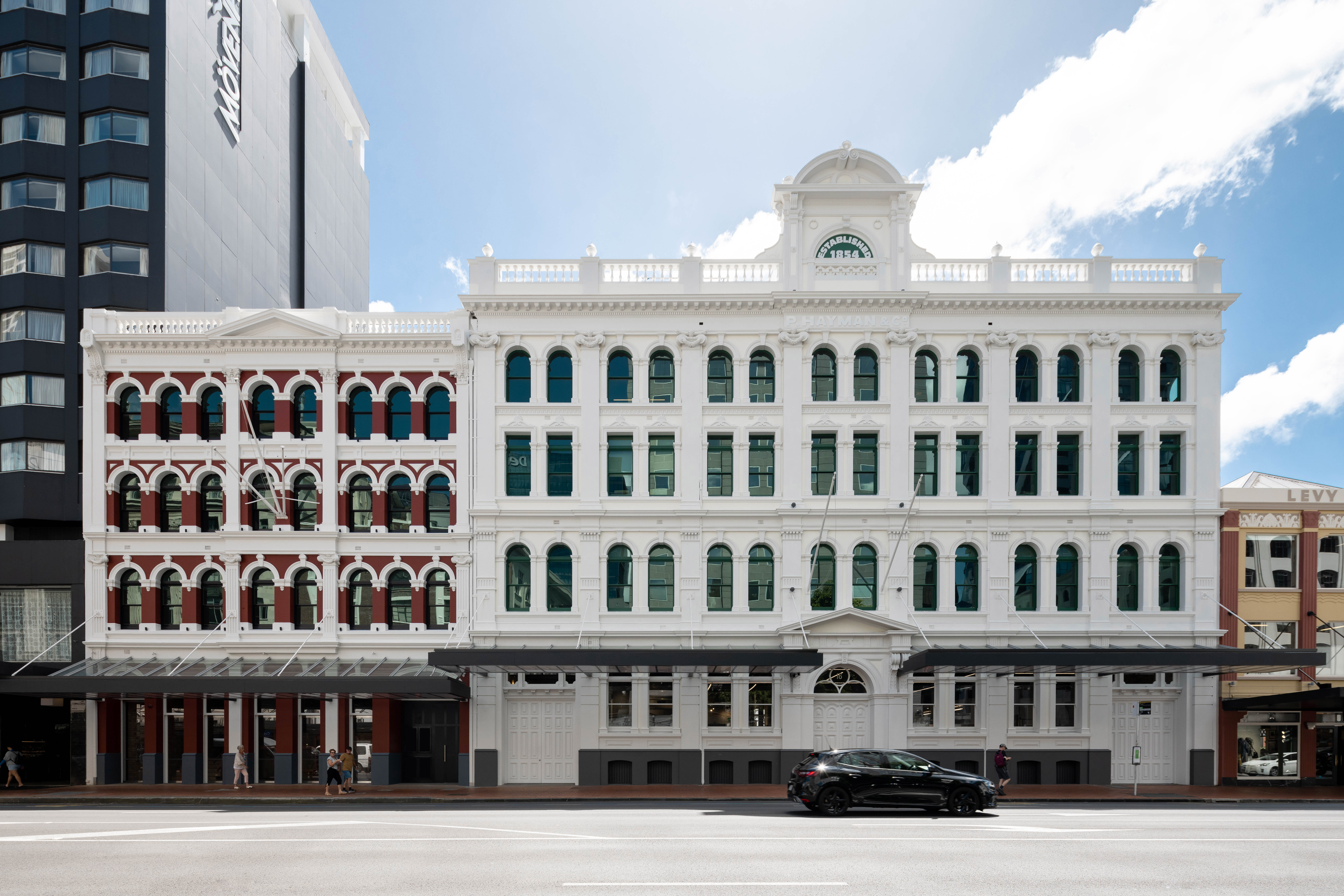
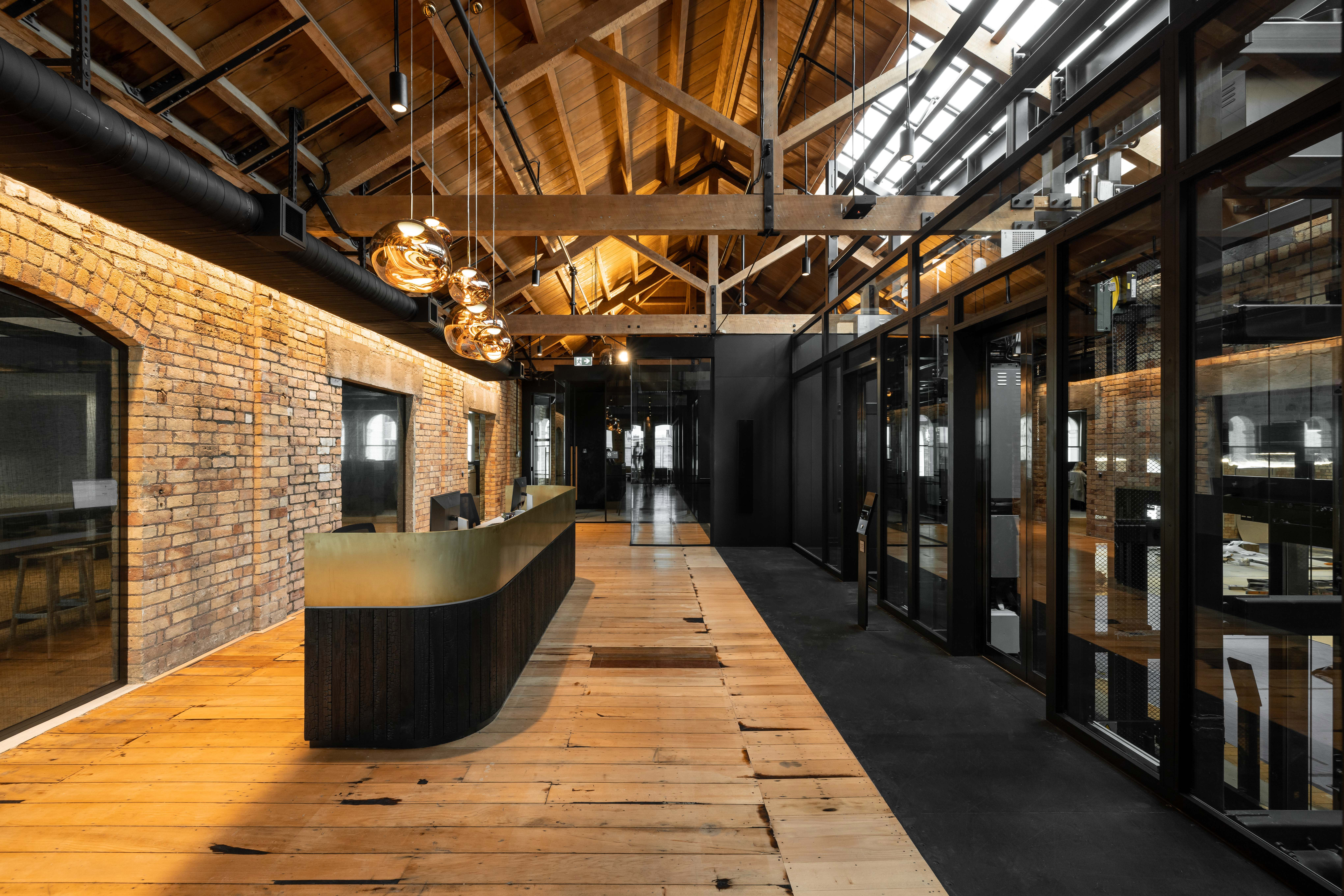
WT provided QS services for the Hayman Kronfeld Building, a project that refurbished and amalgamated two heritage-listed warehouses in the Britomart Precinct. Formerly known as the Barrington Building and Old Sofrana House, the two structures were restored under their original names as part of the redevelopment. The project delivered three levels of Grade A office accommodation across 1,000 m² floorplates, with ground floor retail and one basement level.
The buildings were designed more than a century ago as part of Auckland’s port-side commercial district. The Hayman Building was built for P. Hayman & Co, a trading firm in household goods, jewellery, and instruments. The Kronfeld Building, opened in 1905 and now a Category Two Historic Place, was leased by Gustav Kronfeld, a merchant who built strong trade links for fruits and produce between Auckland and the Pacific Islands.
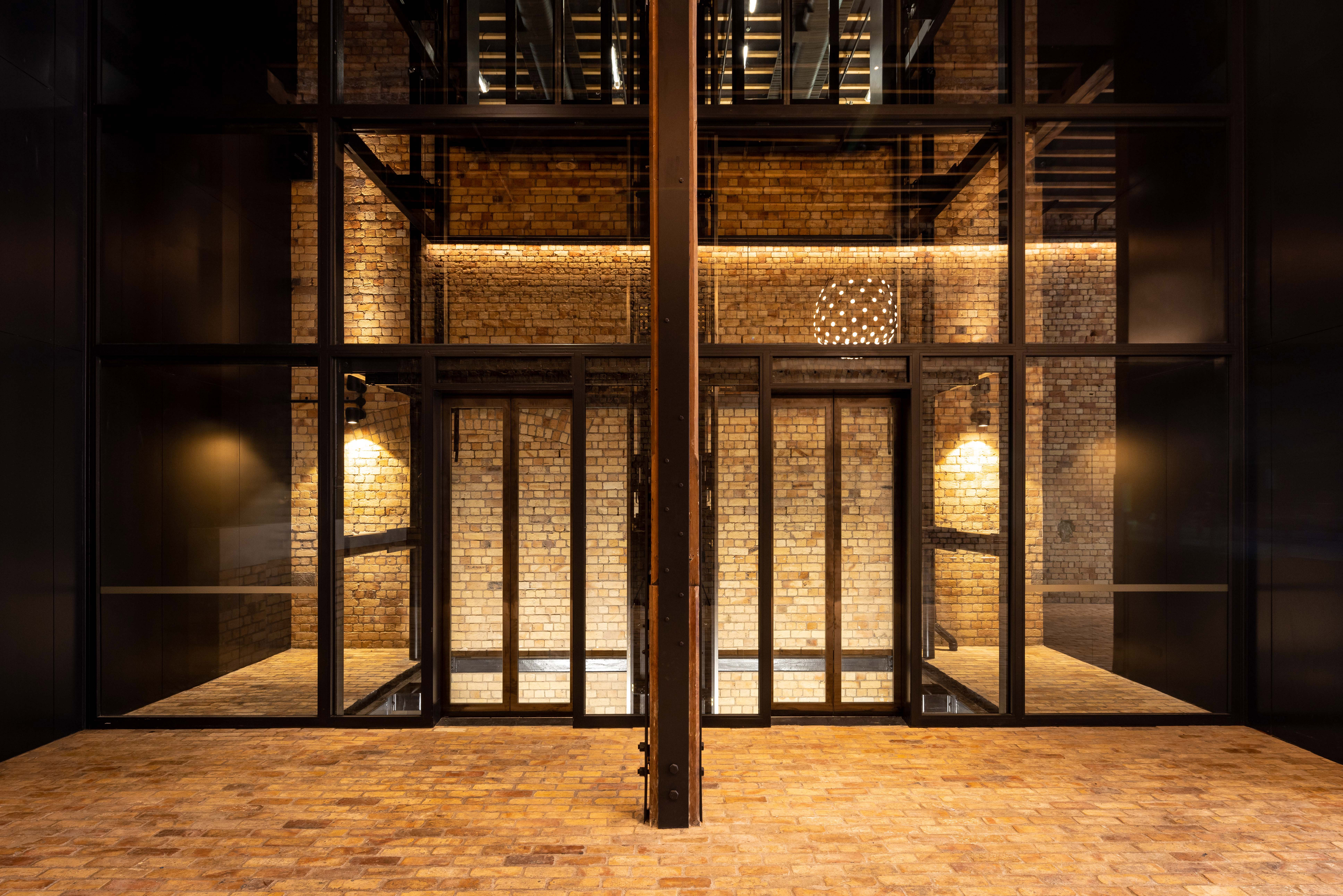
Due to its history, and commercial and cultural importance, the project required a careful approach for delivery. The redevelopment introduced new lifts, fire escapes, and building services, along with a seismic upgrade to 100% NBS. At the same time, it retained concrete foundations, timber floors, and brickwork, reducing embodied carbon and preserving heritage features through exposed finishes. Reduction methods for lowering embodied carbon included using salvaged and recycled materials wherever possible. These measures contributed to an estimated 70% reduction in upfront carbon emissions (around 2,300 tonnes of CO₂ saved).
The project achieved a 5 Green Star Design & As Built rating in 2023, with further sustainability features including waste diversion (70% from landfill), efficient LED lighting and HVAC systems, a new central lightwell for natural light, and indoor air quality monitoring on each floor. The Hayman Kronfeld Building is an example of how heritage structures can be adapted to modern standards of sustainability while retaining their historic elements.
Services provided
WT delivered a full range of cost and commercial management services on the Hayman Kronfeld Building, including:
- Early feasibility estimates and cost planning
- Budget control during design development
- Procurement strategy, tender documentation, and tender evaluation
- Bills of Quantities and trade package breakdowns
- Financiers’ due diligence and pre-construction reporting
- Post-contract cost management and monthly reporting
- Assessment and certification of contractor progress claims
- Management and valuation of variations and change orders
- Cashflow forecasting and cost-to-complete reporting
- Contingency management and risk allowance reviews
- Final account preparation and negotiation
- Independent precinct-wide advice to align with Britomart’s long-term redevelopment strategy
Challenges
Refurbishing and amalgaming two heritage-listed buildings created several layers of complexity. The original structures were more than 115 years old, and their condition was variable, meaning unforeseen issues had to be managed as work progressed. Integrating new lifts, services, and fire escapes into brick and timber structures required careful sequencing and specialist trades, all of which carried additional cost and programme risk.
Balancing heritage retention with seismic strengthening to achieve 100% NBS also demanded close coordination. Strengthening works had to be delivered without compromising heritage elements such as exposed brickwork, timber floors, and original detailing.
Sustainability goals introduced further challenges. The project targeted a 5 Green Star rating and aimed to reduce embodied carbon through adaptive reuse. This required allowances for reusing original fabric, recycling materials, and dealing with the implications of exposing finishes rather than replacing them.
Combining two adjacent buildings with different floor levels and structural grids required creative engineering solutions. WT’s role was to manage the cost impact of these interventions and ensure that commercially viable pathways were maintained while respecting both heritage and sustainability objectives.
Experienced partnership
WT’s early cost planning set realistic allowances for seismic strengthening, heritage trades, and sustainability measures, which gave the client confidence in both design ambition and budget control for these heritage buildings.
Throughout construction, we provided clear reporting on claims, variations, and cashflow, helping the client manage financial risk as unforeseen conditions emerged. When heritage issues were uncovered, our advice enabled practical solutions that maintained character while staying within financial parameters.
Our long-standing experience in the Britomart precinct also added value. Familiarity with heritage refurbishment methodologies and precinct benchmarks meant we could bring tested approaches to cost control and risk management.
By combining robust financial management with an understanding of heritage and sustainability priorities, WT helped deliver a project that balanced modern performance with respect for history – all achieved with commercial certainty.